On Privacy and Politics
Instead of shying away from that reality, it's time to embrace it.
This post contains a link to a YouTube video, appended by a [YOUTUBE WARNING] label. Privacy-conscious readers are advised to copy the link into an instance of Invidious, and/or use a reputable VPN or Tor.
Allow me to preface this essay with a disclaimer:
- As a resident of the United States, my commentary is colored by the political context here. This post is not meant to express support for a specific partisan alignment— it's meant to encourage political engagement, period. That I feel the need to say this up front is precisely why I'm writing it.
Not to make this political, but...
Over the last couple of years, I've noticed a concerning trend: the aversion to discuss particular topics in informal social settings— in public places, group chats, forums, spaces by content creators, and more. This phenomenon is easy to discern with big, media-attracting topics, but it's also slipping into the privacy realm. I've seen Reddit threads posing questions or starting discussions where someone inevitably cautions, "Not to make this political, but..."
This does a great disservice to ourselves and our discourse; it nurtures censorship and creates a chilling effect, inhibits coalition building, and hinders the momentum and unity needed to counter the most pressing challenges. These impediments allow the regressions we loathe to gain strength, legitimacy, and power. When this reluctance is overcome, we can channel our energy to engage more constructively and begin to move the needle on those issues we care so deeply about.
First, we need first reckon with what "political" actually means.
Politics and Power
As a word, politics is versatile; it allows us to flexibly mold conversations about complex ideas like rules, societal expectations, agency, governance, and more. Unfortunately, its potency has been diluted by an improper connotation with a controversial or risky opinion— a "hot take." Eschewing something as political implies there is potential for disagreement and signals it should therefore be avoided. Ironically, expressing an intent not to make a statement political risks making it so.
I can respect a sense of discretion in our conversations. What I take issue with is an inclination not to broach a subject simply because it is politically tinted. In free and open societies, much of life is political. US President Calvin Coolidge warned against a related trend in a 1915 speech:
Politics is not an end, but a means. It is not a product, but a process... politics has come to convey the meaning of crafty and cunning selfishness, instead of candid and sincere service.
Today, we see trust in our democracy and governments is waning. Let's remember, though, that politics does not equal government. While the two are inextricably connected, they are distinct. We should not allow our skepticism or disapproval of our governments to dissuade our participation in the ordering of society. To do so is to invite oppression and totalitarianism.
Because politics is as dynamic as the concept itself, we need a baseline from which to work. I enjoy this definition by Cambridge University Online:
politics (noun)
the relationships within a group or organization that allow particular people to have power over others
Therein lies another fickle word: power. Let's adopt an interpretation by renowned sociologist Max Weber:
... within a social relationship, power is any chance (regardless of the basis of this chance) to carry through one’s own will (even against resistance).”
Taken together, politics is the process by which we engage in social relationships to achieve specific outcomes. Through this lens, engaging politically at the level of national government has equal merit to convincing someone to download Signal to chat. Politics is the bedrock of a healthy and functioning liberal society: a fair shot to improve our lives through discussion, persuasion, and action.
Acting passively within a group is no guarantee others will do the same. Invariably, someone will seize the opportunity to acquire and exercise power— whether through respectful discussion and persuasion, or menacing coercion and force. Canadian Prime Minister Mark Carney touched on this idea in a recent speech. Acknowledging a changing world order, he proposes that middle powers must "act together" to avoid a fate imposed on them by greater ones, lest they "accept what's offered... [and] compete with each other to be the most accommodating."
Between the lines, Mr. Carney strikes at a more fundamental notion: by engaging politically, we carve out power for ourselves. Said another way: we exercise sovereignty, autonomy, and self-determination. He concludes with a sobering view of the risks of political disengagement:
This is not sovereignty. It's the performance of sovereignty while accepting subordination.
To decline political participation is to accept subservience to the strongest. Privacy is no exception to this process.
An urgency today
Over the past decade plus, we have witnessed many, many ups and downs within the privacy landscape. As technology evolves, so do the legislative and cultural responses to it. Often, it feels like a strip from Spy vs. Spy.
Legitimate reasons exist for doubt and pessimism about the current state of affairs. Things which once belonged in the realm of science fiction now exist either in practice or in prototypes. Advanced and ubiquitous surveillance technologies developed by rapacious corporations and coveted by opportunistic governments pose a greater threat to our privacy and basic rights than we've ever known.
- Novel technologies are hastily introduced and hailed as inevitable progress, even while many regress our rights, social harmony, and sense of humanity.
- Access to the internet is heavily filtered, censored, and outright banned in some places.
- Our devices are designed to reveal much more about us than we understood when we invited them into our lives.
- Social media platforms spy on and manipulate us in ways that can only be described as fundamentally antisocial.
- Artificial Intelligence plunders our works and thoughts, then regurgitates them as its own.
- Cameras augmented by AI map our vehicle movements and share them with law enforcement agencies with few constraints.
- Encryption and other tools meant to protect ourselves and our freedoms are frequently targeted by governments in the name of national security or children's safety.
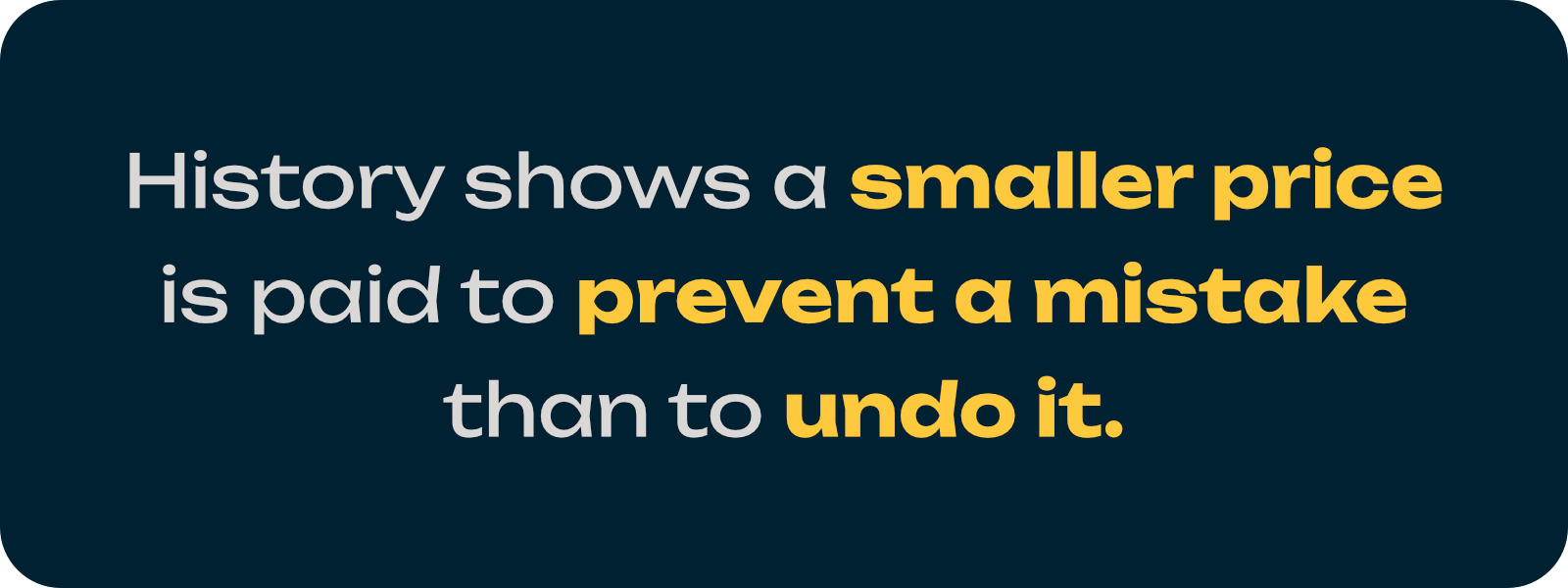
History shows a smaller price is paid to prevent a mistake than to undo it. We can hope and wait for more thoughtful, informed leaders to be elected and make better policy decisions, but that hedges a risky bet while we watch them instead rapidly implement the tools of dystopian fantasies. The trends we witness today demand a coordinated and unified response.
Such a response begins with you and me. We must end the reluctance to speak about certain topics just because they may be political. Patiently hoping and waiting for change to occur is a luxury we simply can't afford. We must actively bring about the conditions necessary to prevent further erosion of our right to privacy.
(Self-) Censorship
Numerous episodes throughout history— and present events— have demonstrated that censorship frequently creates a ripple effect beyond the original target in a phenomenon known as 'the chilling effect,' in which one self-censors or otherwise stifles their own expression, usually out of fear. Neoplatonic academics fled Athens when Justinian I closed the School of Plato. Albert Einstein fled Nazi Germany after angering the regime, and others like him followed. More recently, American professors from Yale announced their departure to teach in Canada, with one saying, "... I want to do my work without the fear that I will be punished for my words." [YOUTUBE WARNING]
Similarly, shunning political discussion creates a chilling effect. You might be familiar with an old adage, "no politics, no religion." In the hospitality industry, this is especially common. The refrain may seem like a wise one: designed to keep the peace and promote harmony. On the other hand, it inculcates a norm where comfort is elevated over dialogue.
The problem with this approach is that once it takes root, censorship follows and propagates. A survey by James L. Gibson, a professor at Washington University in St. Louis, found that 62% of surveyed respondents were most worried about publicly expressing their views within their own community— even more than around their family, friends, and co-workers. Whole parts of the American Revolution were planned in taverns and "public houses", and although caution was undoubtedly practiced, outright silence was clearly not. If we're discouraged from having honest conversations in places we feel comfortable socializing, then opportunities for us to share our ideas and refine them disappear— along with the trust we can place in others.
The "no politics" scenario elicits some important questions: what counts as political? Does censorship engender respect, or does it foster resentment? To whom is that respect afforded, or resentment directed? Who or what is the authority that rules on this? Without clear answers, those not first censored by others tend to do it themselves when the stakes are deemed high enough.
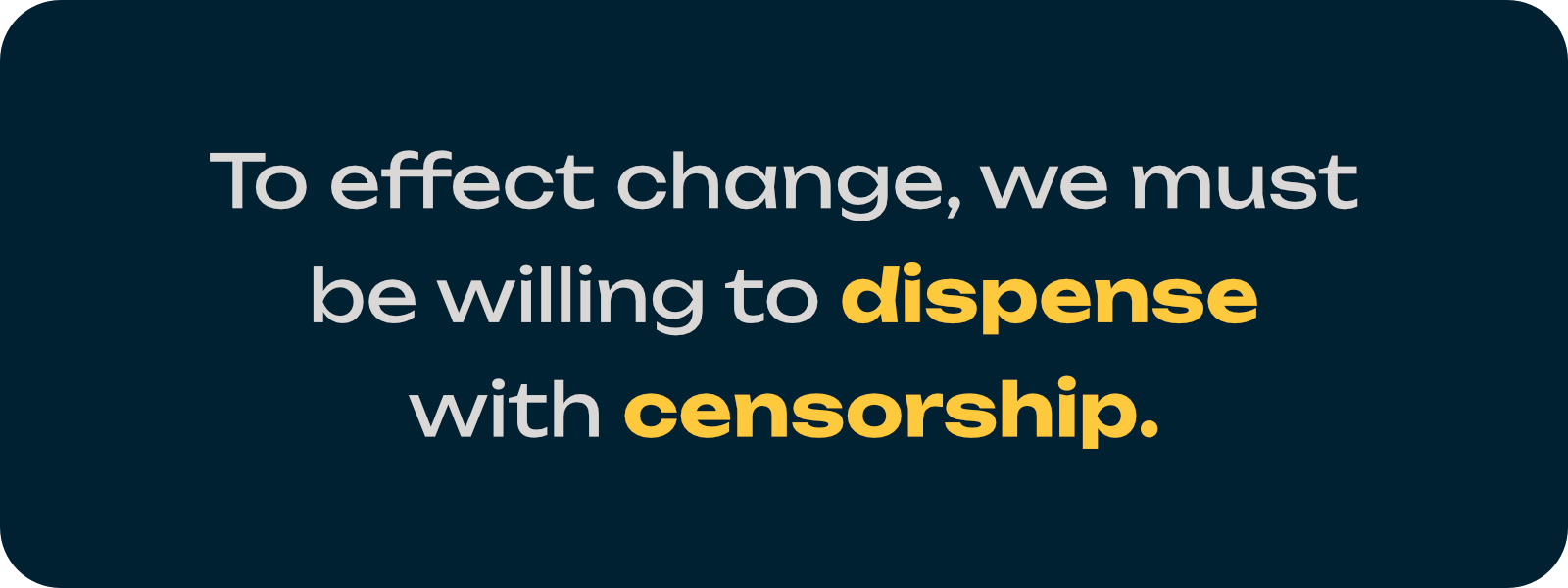
Dissent is a natural threat to power structures, and is therefore frequently persecuted. This is one reason why free speech is a cornerstone of healthy democracies. It defends against corruption and abuse, and acts as an incubator for innovation and problem-solving. Without it, ideas risk isolation— never tested or implemented— and progress is impeded. If we are to effect change, we must be willing to dispense with censorship and, in its place, embrace curiosity, ask questions, think critically, and, perhaps most crucially, coordinate with others.
Coalition building
When we feel secure thinking and speaking freely with ourselves and others, we can begin mounting a more effective resistance against entrenched power structures and bad policy. Key to our success is the ability to build and maintain coalitions. This practice unites people with common interests or goals, and forges an alliance for an impact greater than the sum of its parts.
Throughout history, coalitions have conjoined like-minded and uneasy partners alike: the Allies during World War II, the Greek Revolutionaries supported by the British Empire, France, and Russia, and the Anti-Apartheid Movement in South Africa to name only a few. As President Franklin Roosevelt put it:
...people acting in a group can accomplish things which no individual acting alone could even hope to bring about.
Building and sustaining a coalition is not without challenges. Members can have opposing motivations, competing philosophies, disagreements on the approach required for success, or even the desired outcomes themselves. But, an effective coalition is made up of partners willing to tolerate those differences, navigate them through diplomacy and compromise, and fervently focus on achieving the outcomes together.
The importance of coalitions cannot be overstated in our fight against surveillance. The reality is that our opponents have already built their coalition. They are exceptionally funded, armed with highly skilled lawyers and lobbyists, and well organized. In order to meet this moment, we must seek common ground with others and construct alliances which can adequately confront the forces working against us. The goal is not perfection, it's fierce commitment. Humility, patience, and tactful communication are leading ingredients in a recipe for practical resistance with sustained momentum.
Momentum and unity
Once a strong coalition of diverse partners emerges, real progress can follow. Albert Einstein and his peers helped form what later became the International Rescue Committee, and their efforts helped usher vulnerable artists, scientists, philosophers, and others out of Nazi Germany. The Anti-Apartheid movement, which attracted international partners and culminated in transformational policies, ended formal Apartheid in South Africa, paving the way for Nelson Mandela's presidency and re-engaging the country on the world stage. But what about a more recent, and more relevant example?
Across the United States, growing cynicism towards Flock automated license plate readers (ALPRs) has culminated in a decentralized movement that has kept the company in the headlines and on its back foot. One concerned resident, Will Freeman, decided to raise awareness about the cameras by launching DeFlock, a crowdsourced hub for mapping Flock and other ALPRs. The tool has been cited by cities across the nation in their fight to chase ALPRs out of their communities.
Between local efforts, passionate city council meetings, and coordination with larger campaigns, municipal governments have begun to bow to public pressure. Many have gone on to decline renewing, pause, or altogether abandon their contracts with Flock, sometimes even prematurely. Corporate leadership has reacted with panic to the pushback, going so far as to label Mr. Freeman's organization as "terroristic," which only earned CEO, Garrett Langley, more scorn and skepticism (he later apologized).
The point is this: action leads to momentum, and sustained momentum produces real results. Small, individual victories throughout a broader coalition create a ripple effect that help focus and energize the movement, leading to compounding gains that can quickly tip the scales of power. All of this begins with the willingness to have honest conversations— even when, and especially when, they are uncomfortable— and the ability to form diverse and capable coalitions.
Be political
The world is changing rapidly, and with it, the risks to privacy from new technologies and legislation. Corporations are enticed by the lucrative profits of surveillance capitalism and market monopolies, while governments pursue the chimera of eradicating crime and establishing impenetrable national security. Each is working diligently to undermine and erode the barriers to their goals, and privacy is nothing more than an unfortunate casualty in that pursuit.
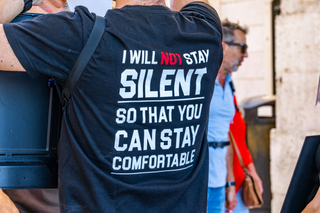
The way toward a more just and private future begins with small steps, taken by you and me. It begins with the willingness and space to be open-minded and considerate; with the bravery to think and speak freely; with the resourcefulness to network and coordinate with others; with the determination to form and maintain focused coalitions; with the resilience to build and sustain momentum, rack up victories, and double down. It begins by being political. These crucial steps cannot and will not happen while we engage in self-censorship, frightened by the prospect our ideas may be criticized or rejected, or offend others, or brush against adjacent but uncomfortable topics.
Powers adversarial to privacy are counting on our silence and complacency. We have a choice to make: speak, organize, and engage— or, as Mr. Carney warned, accept what's offered.